
I’ve been on one of those kicks recently where, on the single-player side, I play a lot of one game in a row, then move onto the next (rather than more-fragmented version of my gaming existence, where I started up six different games and play each for an average of five minutes), and marathon that one for a bit.
Largely because my brain’s been in a sort of all-or-nothing place when it comes to entertainment lately, this has meant that each of these games I’ve been into of late has done the bare minimum of holding my attention. So bear that in mind, given that the blurbs on each are fairly distinct. Anyways, without further adieu:
Don’t Starve Together
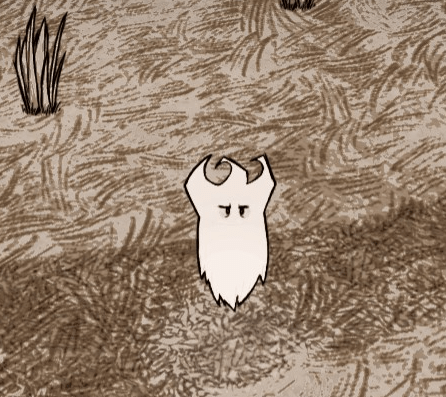
How much I have to sell this one probably has a lot to do with how much you’ve heard about/played “Don’t Starve,” the original single-player version of which arrived in April of 2013. “Don’t Starve Together” is the co-op version of that cartoon survival simulator, and it mixes a cutesy, well-animated appearance with a rock-solid premise which is best described as “delaying the inevitable for as long as possible.”
Of course, you might want to take into account that I’m speaking largely of what happens when you play with me, as I don’t consider myself particularly good at this game, but still.
The basic premise–a key part of that is made clear in the title–is to survive in the wild. To do so, you’ll need to keep your health up, your stomach full, and your sanity intact. Once you have the basics of making campfires (to keep you warm, ward off the creepy things that come out at night, and cook your food), finding food, and collecting things you need to make certain items (a garland of flowers serves as a shield against losing sanity, for example, and building a “science machine” allows you to to do science), you’ll be able to survive long enough to yell at your friends about finding the Beefalo Herd to hide among to ward off the Hounds.
If you die–see above–you can be revived, though it takes a fair amount of effort from your party members to do so. Since the game world is pretty much constantly trying to kill you–don’t stay out at night, stay away from basically anything that isn’t your friends or a rabbit–you will die at some point. At this point, my favorite activity is haunting the vegetables my teammates have planted to make them grow faster. Unfortunately, my presence as a ghost is a drag on their sanity. Such a conundrum.
Anyways, playing the single player version of “Don’t Starve” will give you a pretty good idea of the mechanics. That said, even though it’s a fun game in itself, “Don’t Starve Together” feels like such a natural progression into a better, more-expletive filled (“where the @$## are you guys? I accidentally aggro’d the Beefalo again!”) version of the game that in retrospect it’s hard to believe it’s only existed since April of 2016.
The only caveat I’d mention before starting your own journey, which, invariably, will end in cold hard reality, is that “Don’t Starve Together” is a standalone expansion, so with both it and “Don’t Starve” being $15 each–and both being recommended–you might want to wait on the next sale (depending on whether or not survival games are your usual cup of tea, or if you’re trying something like this for the first time). That said, you really could do worse with those $30, and I frequently have.
Watch_Dogs
Speaking of “I’ve done worse with $30,” it’s Watch Underscore Dogs! It’s rare that I actually manage to sink 15 hours into a game and still manage to end up agreeing with most of the criticisms leveled at it, but here we are.
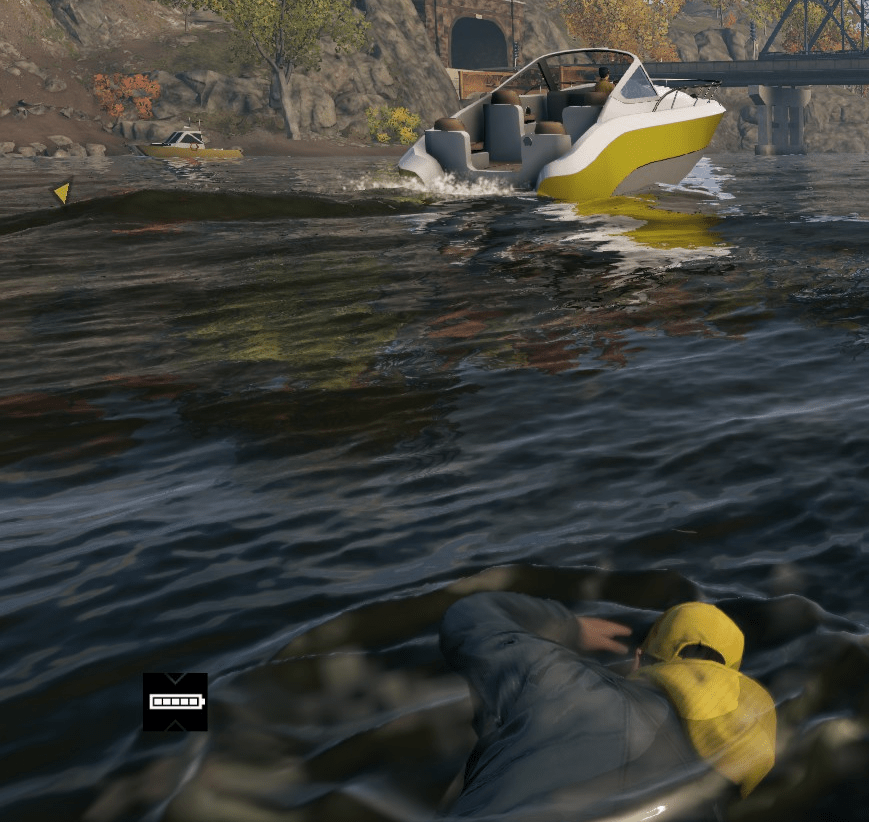
Did I mention the sort of “all-or-nothing” kick I’ve been on has lent itself to Open World games? Well, it has. I just finished Mafia III recently, re-installed LA Noire the other day, and I’m currently making my way through Sleep Dogs’s Definitive Edition (I’ll be posting on each of these down the line). I would like to report that all of those are better games than the first Watch_Dogs. You probably already knew this or suspected it based on some of the reviews of Watch Underscore Dogs when it was first released. Well, it’s true. I could try to clumsily complain about the storyline/protagonist myself, or I could highlight this quote from a Finnish game reviewer who absolutely nailed it:
Ubisoft’s flagship title has a really, really repulsive protagonist. The entire storyline feels like it was cranked out of a automated story generator
Full stop. That’s pretty much all you need to hear on the subject. Open worlders don’t need a likable, or even compelling protagonist in order to succeed, given good gameplay. But Watch_Dogs open world is, well, fine, and nothing to write home about. And the storyline allegedly contains five acts and, honestly, with how little effort appears to have gone into making anything about it interesting, it seems to be daring the player to give a fuck.
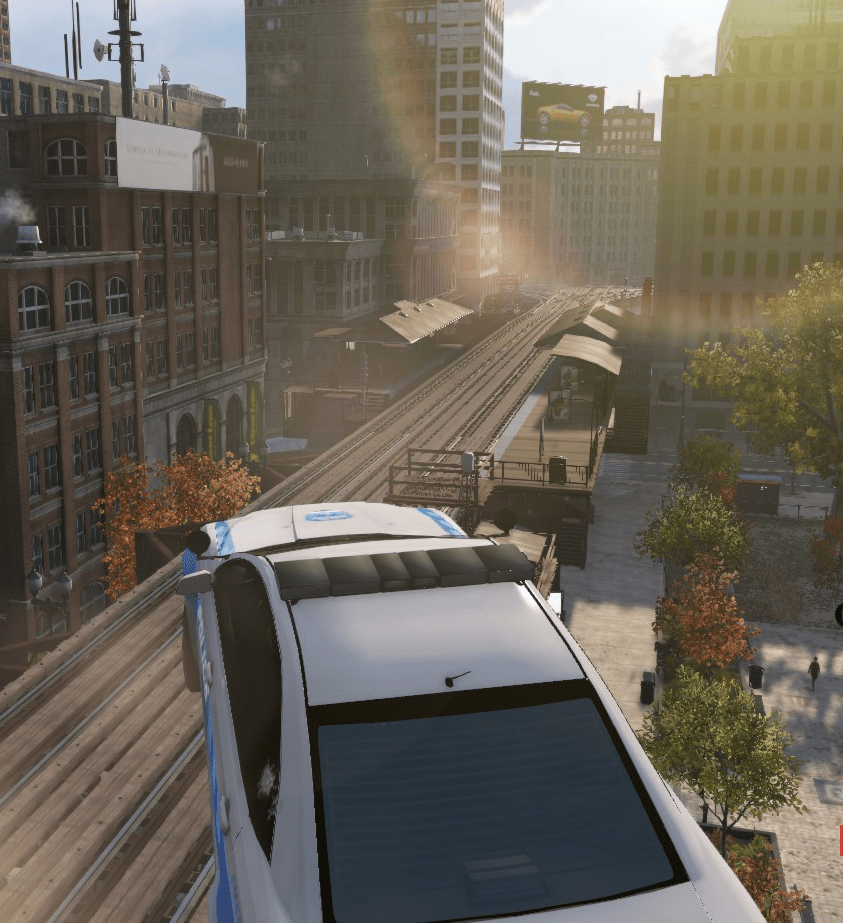
There’s a perfectly playable game here, and I logged 15 hours in it before I finally just had to hit the breaks. I’ll give Watch_Dogs credit for feeling marginally distinctive from other “Drive Around A City And Be Rude” games based on Grumpy Protagonist’s ability to hack into things. The first couple times you hack a system in Kind Of Chicago, it’s legitimately cool. And I never stopped being amused by hacking traffic lights to cause NPCs to smash their cars together, though this is no small part because of how hard it was for me to find something else distinctive from other games (or fun).
The thing is, everyone’s made one of these games now, so it’s not quite enough to turn out the same template as GTA without giving me more of a reason to care about playing this version of said template. For some people, perhaps the hacking is enough of a reason. Or you’ll find something else about this game more enjoyable than I did. However, as it stands, it’s not something I can recommend going back and digging up, especially since the second one is out and apparently better.
(NOTE on that linked review: it shouldn’t be taken as gospel, but the reviewer for RPS basically felt the same as I do about Watch_Dogs 1, so his input on Watch_Dogs 2 being a better game seems relevant)
(NOTE 2: since the second game is out, the first one’s price is likely to drop, so…you can probably find out yourself if you enjoy this game more than I did)
Tyranny
I still haven’t gotten to the more-heralded Obsidian/Paradox venture, Pillars of Eternity, and the fact that the two companies teaming up for this game is pretty much directly why.
So in Tyranny, you’re trying to make your own way in a harsh world, and you work for bad people. No, stop! Don’t leave! I know you’re thinking, “Gus, that is exactly like real life, why would I want to play a game like that?”
But! In RPG form, it turns out this is actually quite entertaining. Well, that and the fact that you possess a great deal of influence over the way things turn out in “Tyranny.” Wow yep I should not have used that real-life analogy, this blurb is already about four times as depressing as I meant it to be (rise up, my fellow proles!).
Anyhow, Tyranny takes the cRPG premise and turns it on its head, and that’s really the main appeal. Kyros, a sort of Sauron-like overlord type, has taken over almost the entire setting world. You’re playing an agent of the “Archon of Justice,” a hooded fellow named Tunon, and you’re sent to one of the recently conquered parts of Kyros’s realm to oversee the putting down of a local rebellion.
Essentially, you’re middle management in an Evil Empire, rather than necessarily being The Hero We Need.
The lore for the world is well done, and, without wanting to get too much into spoilers, the decisions you make do matter for the plot quite a bit. It’s initially shown as a conflict between two different factions in Kyros’s army–suggesting that you need to pick a side between the two–but things branch out quite a bit. Lest I forget, there’s a cool sequence at the beginning where you pick how your character was involved in the Conquest of the locals (you can also skip this, but I don’t know why you would), and there is the first of many examples of how your decisions and the plot are interwoven. There are a significant number of times where, based on something your character did two years ago (in game time), the local will react in a way that either gives you more options or forces you to purse an avenue you might have wanted to avoid in the name of Doing You Job.
If that last part sounds like “railroading,” what I mean is that you actually get a feel for being someone who’s got to make tough decisions or they’ll have Tunon & Kyros calling them to the office. There’s a delicate balance sometimes in this game of trying to avoid pissing everyone off-Tyranny keeps track of your relations with different factions and characters, and part of the weight of your decisions is the impact on you when you realize you’ve hit a point where you can’t please everyone.
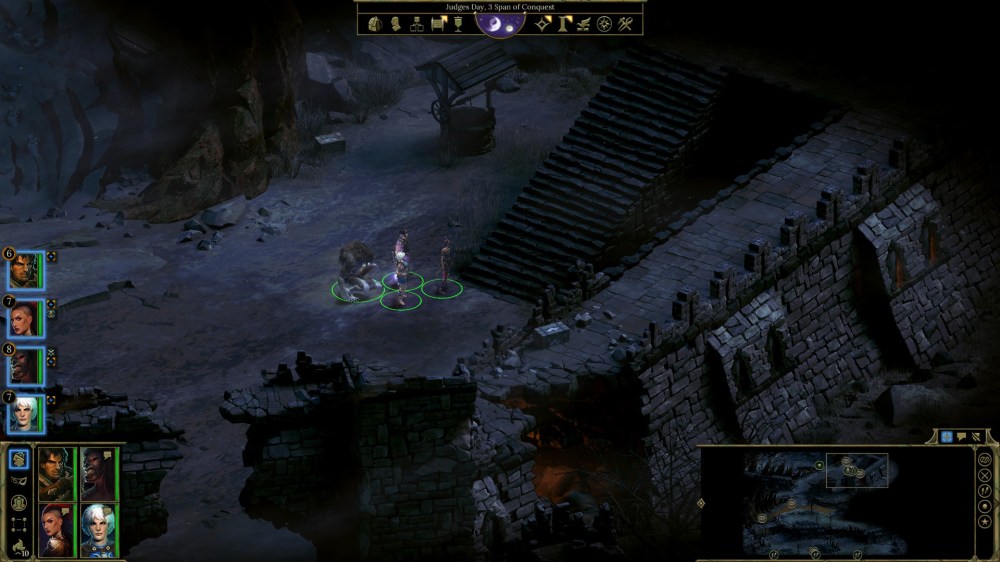
The companions in your party–you’ve got the pretty-standard four party members, including your own character–were fairly well-developed, though not quite as fleshed out as a Dragon Age, Pillars, etc., and if there’s one mediocre aspect of this game, it’s that the combat system–while not really the same one as most fight-and-pause-and-fight party-based RPGs uses–is nothing to write home about. Hence the reason I haven’t really got into the archetypes you can play as–while there’s actually very good variety in terms of gameplay from class to class, this was not one of the things that particularly stood out for me.
Still, between the intriguing premise of playing as a the bad guy (and good grief, if you want to be bad, you will have several chances to prove that), a world I found interesting, the choices actually affecting the plot in tangible ways, and the interactions between the major players…I’ve been more than entertained. It’s also not that long by design, which is basically to encourage you to re-play it and try different paths.
Tyranny’s probably a bit steep at $40, but, as someone who likes RPGs and enjoys when the old molds are broken in fun ways, I can’t recommend it enough on the first half-off sale that hits.
 Game Mechanics