We’re back with the third installment of Wildermyth Wednesday! It’s been a little while, and I’m eager to get back on the ball, so let’s move right in to the screenshots for this week.
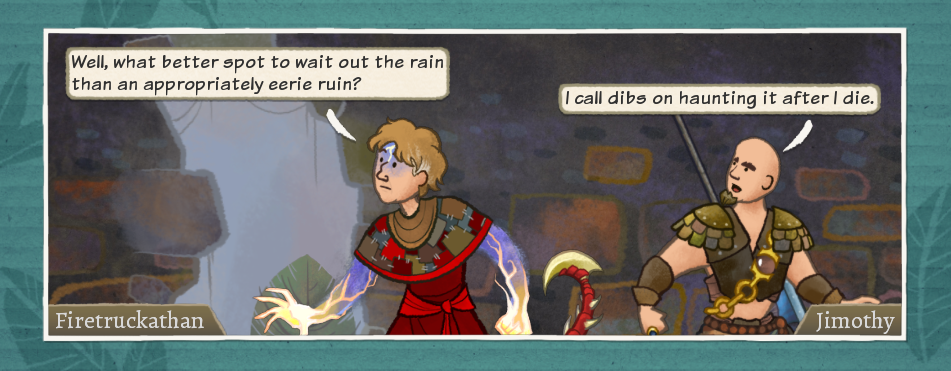
Firetruckathan & Jimothy Find A Ruin
In the above image, two of my long-time characters, Firetruckathan Broad and Jimothy Jackalitis, have found an “appropriately eerie ruin.” They’re both funny characters who appear frequently in the multiplayer games I’ve mentioned in previous posts, with Jimothy having the highest possible “Goofball” rating that a character can have. That’s why he’s seen here calling dibs on haunting this ruin after he dies.
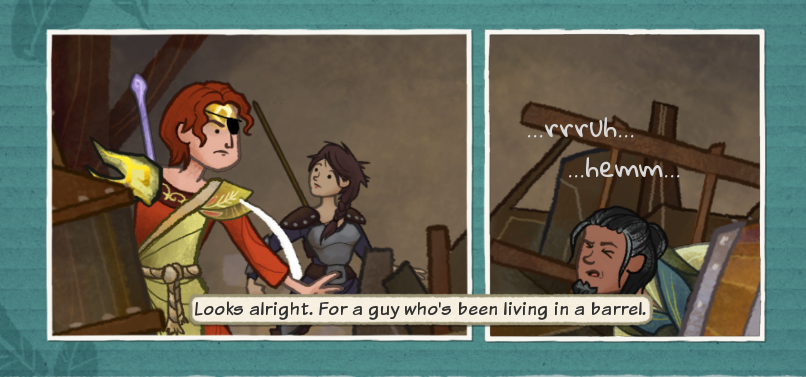
Eleni & Warietta Reunite
There’s not a ton going on here in these two screenshots, but I really like how Wildermyth contains events like this one. While interactions like this are simple on the surface, they show the connection between your characters in a way that feels true to real life human interactions.
Anyways, here is Eleni Heartthrob, a mystic of some reknown, and Warietta Wobinson, a pretty deadly hunter in her own right, are joking with one another as they see each other for the first time in awhile.
…I do think Eleni’s maybe being a bit unfair to her friend here, whose hair is not exactly “standard.”
Selected Passages from Rowdy
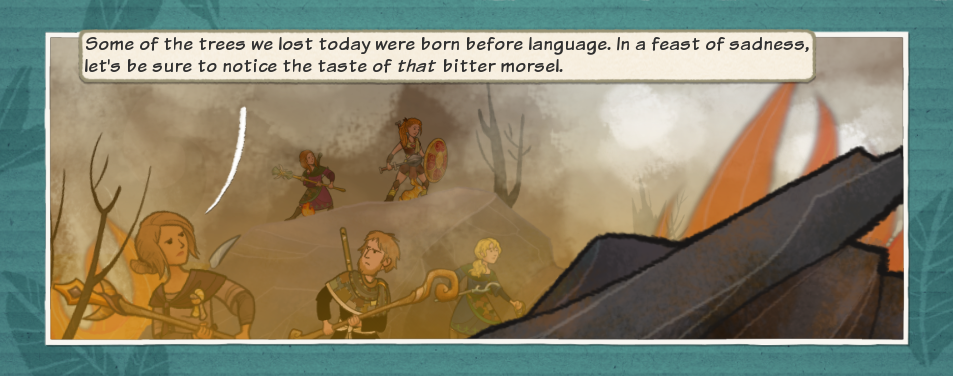
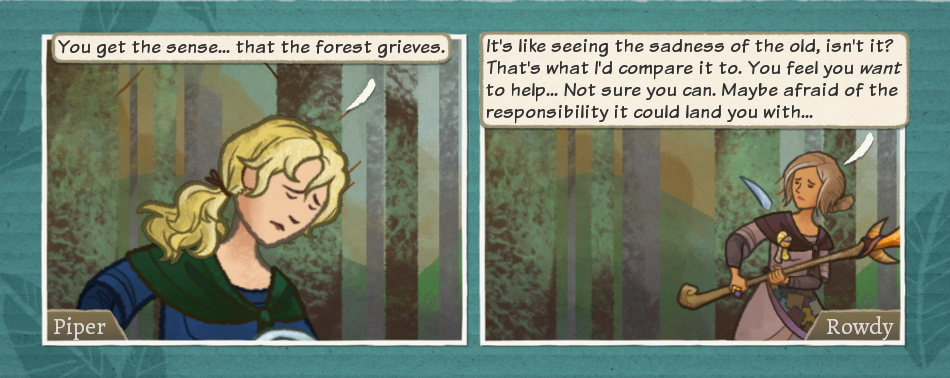
Rowdy Aylen is a poet, and I don’t remember how she came to be named Rowdy. Was it the game generating a somewhat goofy name? Was it me deciding that, for some reason, I was going to give that name a hilariously-dramatic character who speaks as if she’s playing a part in a somewhat overbaked play?
Regardless of how she came to be Rowdy, here she is! In the first shot, she’s reminding her recently-triumphant-in-battle friends that we just lost some really old trees (fair, but a kinda silly thing to say before something like “oh friends, I’m glad we all made it through the fight alive!”). In the second one, she takes Piper Pippinwiffle Jr.’s observation about the forest grieving to be a prompt for her latest verse. I need to remember to actually feature her in a campaign again soon.
Artir & Taylor Sing Together
Mystics in love. Taylor Timethief and Artir Cranberrysauce singing together was very cute. I have to think they both noticed each other’s hair at some point before they started being a thing.
Xanfar the Magnificient Passes Judgment Upon a Guy
I don’t think any further explanation is required here.
I am a total sucker for monster movies, otherwise known as “the creature feature.” People point to Creature From the Black Lagoon, The Wolfman, or Dracula. Me? I point to classics like Jaws, American Werewolf in London, Godzilla, or Night of the Living Dead.
But I also love the hot garbage they typically serve up on places like the SyFy channel: Sharktopus, Abominable, and everything in-between. Hence when I chose to start ventures in screenwriting, I wrote Snake-Bear, which is as literal as it sounds. It served as a parody with a purpose. And much like my beloved furry hissing friend, this movie, Bertino’s The Monster, is not just a monster movie; it’s a film with a pulse and purpose.
Sometime in the fall of 2016, I saw the trailer for The Monster. And it did not disappoint. The tense shots of terror, the impeccable lighting, and quick transitions all had me hooked. When I saw that it was being distributed by A24 Films, that was the final straw (spoiler alert: they’ve had a great year). I needed to see this movie.
Because this genre is right in my wheelhouse, I’ve grown accustomed to keeping a sort-of checklist in my head, one that allows me to discern whether or not the film is successful in it’s attempt to reinvigorate the genre. It looks vaguely something like this:
Is the monster interesting?
Does the monster appear to symbolize anything?
Is that symbolism foreshadowed or set-up?
Do we give a crap about the characters?
Is the mood clear?
So, in using this checklist, let’s review this.
Overview
The Monster follows the story of Kathy (Zoe Kazan) and her daughter, Lizzy (Ella Ballentine), as they navigate the roadways of adulting and parenthood en route to bring Lizzy to her father’s house. Let’s just say the mother-daughter relationship here is…rocky. Verrrrrrry rocky. Like “scream ‘fuck you’ over and over and over and over again in a garage because daughter doesn’t want her shitty mother to go to the school play” rocky. Oof. (Symbolism? Check and check.)
As Kathy takes her daughter on the road, their conversations are sparse and frustrating, thinly-veiled apologies coupled with appropriately intermittent flashback sequences showing just how bad of a parent Kathy is. As a heavy rain descends upon their night-time trek, they hit a wolf in the road, thus sending this road trip into chaos. With every minute that transpires, they wait for help to arrive. While Lizzy has these premonitory ideas of the wolf being hit, the car being toast, and the wolf’s body being dragged away by something, Kathy does her best to put on her big-girl pants and parent her daughter into not fearing whatever may be out there.
Continuing the Checklist
Much like that of Spielberg’s Jaws, we only catch glimpses of the elusive monster, typically in silhouette or a specifically opaque shot of the monster in the background lurking. While the shark does not appear until nearly an hour into Jaws, the titular monster appears approximately 45 minutes in, which is certainly comparable time-wise, considering the 91 minute run-time of this film. When we do see it in its entirety, the thing is a hulking and wolfish monstrosity, with slick or charred black skin, whitish opaline eyes, and immense teeth, much like your classic “Little Red Riding Hood” nursery rhyme. This seems fitting because the film begins with a title card from an “unknown” child’s nursery rhyme. (More foreshadowing here.)
So is the monster cool? Yes and no. Yes in that the creature itself is not-so-typical. In the third act, Kathy realizes that the creature is resistant to light being cast on it. It’s not a silver bullet, but it demonstrates weakness and a connectedness to the overall symbolism behind the monster. When we look at the aforementioned dumpster fire relationship, there are so many instances where vices, like drinking, drugs, etc., are all valued more than that of the life of the child in the picture. In this case, as the metaphor suggests, the monster’s resistance to the light is much like that of the terrible things that Kathy has done to Lizzy “being brought to light.” It’s literal, but I’m cool with that. (Mood? Check.)
Where the monster fails at being cool lies within the very obvious influences it draws from to be a successful monster. For one, it bears a striking resemblance to the creatures found in the Feast film franchise. The difference here is that is not bipedal, but slinks around like a predator of the night. Another obvious influence would be that of Stephen King’s Cujo. There’s a distinct break from this film and Cujo, but the creature’s dog-like aspects make us begin to believe that its wolfishness is on purpose. Don’t forget the fact that much of the film takes place within the claustrophobic confines of an old car. At this point in the horror genre, it’s pretty hard to be original.
Strengths
1. Short cast lists are aesthetically pleasing.
The movie features only a handful of prominent actors that hold any value to the telling of the story. Kazan and Ballentine have the most screen time, where we also see a tow-truck driver and paramedics who arrive on scene who are only there as red shirts to be devoured by the monster. Scott Speedman (yes, that Scott Speedman) plays the deadbeat dad who is partially responsible for the detriment of the child’s younger years. He’s on-screen for about two minutes and that’s also fine by me. Kazan and Ballentine are dynamic throughout and really help this film in the telling of this story.
2. Lighting is everything.
I would be the last person to remark about lighting in films, mostly because my dominant focus is on things like shot composition, mise-en-scene, and angles. In this, the director’s choice to rely on minimal lighting exacerbates the tension and scare factor of the creature lurking in the shadows. Much of the light presented on screen during the second act comes from a flashlight, headlights from the car, and a single street light on the road. It fits, thematically, with the monster so well, and if anything, it helps foreshadow both its strength and its demise.
3. Flashbacks are used appropriately and effectively.
Not to beat a dead wolf, but this film heavily relies on flashbacks to relay its message and deeper meanings. The number of flashbacks average about one per act (if my memory serves me), and that seems kind of perfect given the circumstances. People will want to watch this movie because a big thing eats some people, but you have to give the people a reason to live and fight. These flashbacks give us everything we need to invest in this story. (Care about characters, aka just Lizzy? Check.)
Weaknesses
1. The third act is…too fast.
When a writer acts on their natural urge to “make their characters suffer,” it’s more helpful than not to give us time to breathe. Sure, the flashbacks offer some of that time for reflection and understanding, but the third act of this movie feels rushed and largely unfinished. The third act does accomplish most of the things it wants to: the mother realizes how much of a piece of shit she is, the creature is conquered and killed, and Lizzy gets her much-needed freedom. However, amidst the revelations Kathy has, she ultimately decides to sacrifice herself to the monster in an attempt to allow Lizzy to get away. Naturally, it doesn’t go as planned, the monster kills Kathy, they have a sad death gurgle scene together, and the responsibility falls on Lizzy’s shoulders. Had it not been overtly clear throughout that Lizzy is the only responsible character in the movie, we would question this. However, Lizzy uses fire to extinguish the beast and make it out alive just as dawn breaks.It doesn’t feel like a full act as the film closes. We are left with some unconscious need unmet. Where will she go? To be successful, did she need to let her mother die? Lizzy is really the only character in the whole movie we really care about. She is our eyes and ears. We are invested in her; we empathize with her and her struggle. Reasonably, I don’t think Kathy does enough to prove her love, her ability to be a parent, or earn the forgiveness of Lizzy or the audience. It definitely feels like a deal-breaker because it is.
Conclusion
I’m sure there are other weaknesses to be found in this film, but overall it was exactly what it needed to be and it met the expectations that I had set for it. As an indie horror flick, it sates one’s need to invest in a story that means something, especially one that fits the genre so well. It’s message is powerful and it resonates throughout, right down to the monster itself. It’s not the most ground-breaking monster movie ever made, but it’s one that I can safely recommend for those interested in the genre.
Score: Three partially eaten tow-truck drivers out of five.
I’ve been on one of those kicks recently where, on the single-player side, I play a lot of one game in a row, then move onto the next (rather than more-fragmented version of my gaming existence, where I started up six different games and play each for an average of five minutes), and marathon that one for a bit.
Largely because my brain’s been in a sort of all-or-nothing place when it comes to entertainment lately, this has meant that each of these games I’ve been into of late has done the bare minimum of holding my attention. So bear that in mind, given that the blurbs on each are fairly distinct. Anyways, without further adieu:
Don’t Starve Together
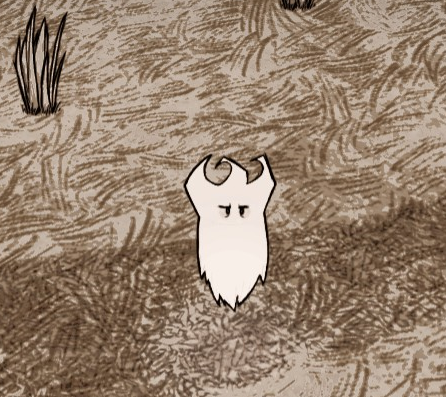
This is me.
How much I have to sell this one probably has a lot to do with how much you’ve heard about/played “Don’t Starve,” the original single-player version of which arrived in April of 2013. “Don’t Starve Together” is the co-op version of that cartoon survival simulator, and it mixes a cutesy, well-animated appearance with a rock-solid premise which is best described as “delaying the inevitable for as long as possible.”
Of course, you might want to take into account that I’m speaking largely of what happens when you play with me, as I don’t consider myself particularly good at this game, but still.
The basic premise–a key part of that is made clear in the title–is to survive in the wild. To do so, you’ll need to keep your health up, your stomach full, and your sanity intact. Once you have the basics of making campfires (to keep you warm, ward off the creepy things that come out at night, and cook your food), finding food, and collecting things you need to make certain items (a garland of flowers serves as a shield against losing sanity, for example, and building a “science machine” allows you to to do science), you’ll be able to survive long enough to yell at your friends about finding the Beefalo Herd to hide among to ward off the Hounds.
If you die–see above–you can be revived, though it takes a fair amount of effort from your party members to do so. Since the game world is pretty much constantly trying to kill you–don’t stay out at night, stay away from basically anything that isn’t your friends or a rabbit–you will die at some point. At this point, my favorite activity is haunting the vegetables my teammates have planted to make them grow faster. Unfortunately, my presence as a ghost is a drag on their sanity. Such a conundrum.
Anyways, playing the single player version of “Don’t Starve” will give you a pretty good idea of the mechanics. That said, even though it’s a fun game in itself, “Don’t Starve Together” feels like such a natural progression into a better, more-expletive filled (“where the @$## are you guys? I accidentally aggro’d the Beefalo again!”) version of the game that in retrospect it’s hard to believe it’s only existed since April of 2016.
The only caveat I’d mention before starting your own journey, which, invariably, will end in cold hard reality, is that “Don’t Starve Together” is a standalone expansion, so with both it and “Don’t Starve” being $15 each–and both being recommended–you might want to wait on the next sale (depending on whether or not survival games are your usual cup of tea, or if you’re trying something like this for the first time). That said, you really could do worse with those $30, and I frequently have.
Watch_Dogs
Speaking of “I’ve done worse with $30,” it’s Watch Underscore Dogs! It’s rare that I actually manage to sink 15 hours into a game and still manage to end up agreeing with most of the criticisms leveled at it, but here we are.
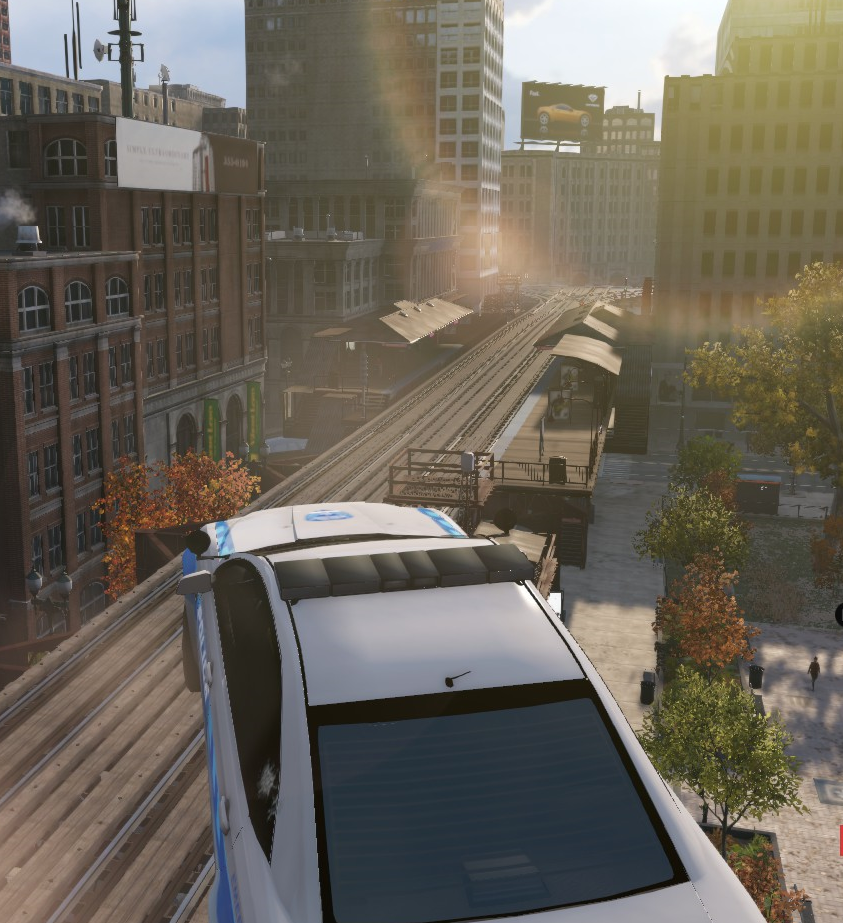
“Bring that back, NOW! That boat matches my outfit!”
Did I mention the sort of “all-or-nothing” kick I’ve been on has lent itself to Open World games? Well, it has. I just finished Mafia III recently, re-installed LA Noire the other day, and I’m currently making my way through Sleep Dogs’s Definitive Edition (I’ll be posting on each of these down the line). I would like to report that all of those are better games than the first Watch_Dogs. You probably already knew this or suspected it based on some of the reviews of Watch Underscore Dogs when it was first released. Well, it’s true. I could try to clumsily complain about the storyline/protagonist myself, or I could highlight this quote from a Finnish game reviewer who absolutely nailed it:
Ubisoft’s flagship title has a really, really repulsive protagonist. The entire storyline feels like it was cranked out of a automated story generator
Full stop. That’s pretty much all you need to hear on the subject. Open worlders don’t need a likable, or even compelling protagonist in order to succeed, given good gameplay. But Watch_Dogs open world is, well, fine, and nothing to write home about. And the storyline allegedly contains five acts and, honestly, with how little effort appears to have gone into making anything about it interesting, it seems to be daring the player to give a fuck.
And I truly do not a give fuck, you see.
There’s a perfectly playable game here, and I logged 15 hours in it before I finally just had to hit the breaks. I’ll give Watch_Dogs credit for feeling marginally distinctive from other “Drive Around A City And Be Rude” games based on Grumpy Protagonist’s ability to hack into things. The first couple times you hack a system in Kind Of Chicago, it’s legitimately cool. And I never stopped being amused by hacking traffic lights to cause NPCs to smash their cars together, though this is no small part because of how hard it was for me to find something else distinctive from other games (or fun).
The thing is, everyone’s made one of these games now, so it’s not quite enough to turn out the same template as GTA without giving me more of a reason to care about playing this version of said template. For some people, perhaps the hacking is enough of a reason. Or you’ll find something else about this game more enjoyable than I did. However, as it stands, it’s not something I can recommend going back and digging up, especially since the second one is out and apparently better.
(NOTE on that linked review: it shouldn’t be taken as gospel, but the reviewer for RPS basically felt the same as I do about Watch_Dogs 1, so his input on Watch_Dogs 2 being a better game seems relevant)
(NOTE 2: since the second game is out, the first one’s price is likely to drop, so…you can probably find out yourself if you enjoy this game more than I did)
Tyranny
I still haven’t gotten to the more-heralded Obsidian/Paradox venture, Pillars of Eternity, and the fact that the two companies teaming up for this game is pretty much directly why.
This is a screenshot of the game’s logo, because it turns out I’m terrible at remembering to screenshot RPGs. Uh, I mean, I…uh…wanted to avoid spoilers.
So in Tyranny, you’re trying to make your own way in a harsh world, and you work for bad people. No, stop! Don’t leave! I know you’re thinking, “Gus, that is exactly like real life, why would I want to play a game like that?”
But! In RPG form, it turns out this is actually quite entertaining. Well, that and the fact that you possess a great deal of influence over the way things turn out in “Tyranny.” Wow yep I should not have used that real-life analogy, this blurb is already about four times as depressing as I meant it to be (rise up, my fellow proles!).
Anyhow, Tyranny takes the cRPG premise and turns it on its head, and that’s really the main appeal. Kyros, a sort of Sauron-like overlord type, has taken over almost the entire setting world. You’re playing an agent of the “Archon of Justice,” a hooded fellow named Tunon, and you’re sent to one of the recently conquered parts of Kyros’s realm to oversee the putting down of a local rebellion.
Essentially, you’re middle management in an Evil Empire, rather than necessarily being The Hero We Need.
The lore for the world is well done, and, without wanting to get too much into spoilers, the decisions you make do matter for the plot quite a bit. It’s initially shown as a conflict between two different factions in Kyros’s army–suggesting that you need to pick a side between the two–but things branch out quite a bit. Lest I forget, there’s a cool sequence at the beginning where you pick how your character was involved in the Conquest of the locals (you can also skip this, but I don’t know why you would), and there is the first of many examples of how your decisions and the plot are interwoven. There are a significant number of times where, based on something your character did two years ago (in game time), the local will react in a way that either gives you more options or forces you to purse an avenue you might have wanted to avoid in the name of Doing You Job.
If that last part sounds like “railroading,” what I mean is that you actually get a feel for being someone who’s got to make tough decisions or they’ll have Tunon & Kyros calling them to the office. There’s a delicate balance sometimes in this game of trying to avoid pissing everyone off-Tyranny keeps track of your relations with different factions and characters, and part of the weight of your decisions is the impact on you when you realize you’ve hit a point where you can’t please everyone.
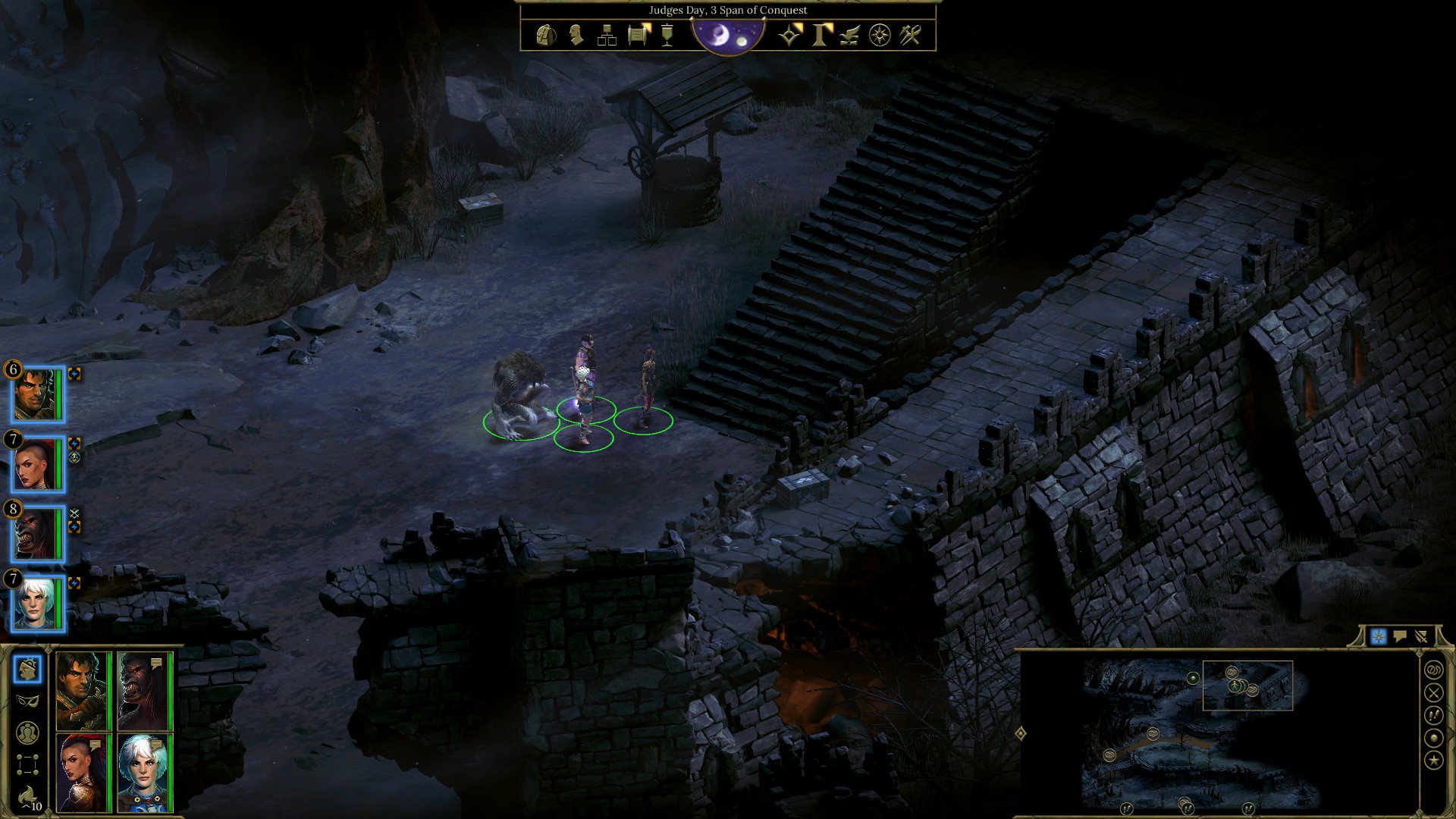
There, I found a screenshot. Thank goodness.
The companions in your party–you’ve got the pretty-standard four party members, including your own character–were fairly well-developed, though not quite as fleshed out as a Dragon Age, Pillars, etc., and if there’s one mediocre aspect of this game, it’s that the combat system–while not really the same one as most fight-and-pause-and-fight party-based RPGs uses–is nothing to write home about. Hence the reason I haven’t really got into the archetypes you can play as–while there’s actually very good variety in terms of gameplay from class to class, this was not one of the things that particularly stood out for me.
Still, between the intriguing premise of playing as a the bad guy (and good grief, if you want to be bad, you will have several chances to prove that), a world I found interesting, the choices actually affecting the plot in tangible ways, and the interactions between the major players…I’ve been more than entertained. It’s also not that long by design, which is basically to encourage you to re-play it and try different paths.
Tyranny’s probably a bit steep at $40, but, as someone who likes RPGs and enjoys when the old molds are broken in fun ways, I can’t recommend it enough on the first half-off sale that hits.






 Game Mechanics