Features

Wildermyth Wednesday, Part 2

And we’re back! For those of you who missed part one, Wildermyth Wednesday is a regular series involving screenshots collected from the Worldwalker Games 2021 release. Wildermyth is an RPG with turn-based combat that does an amazing job of making the story focus on the characters which you, the player, recruit/create. It’s fun! You might consider trying it sometime!

Without further adieu:

The Adventures of Zanbert

There are plenty of opportunities to transform characters in Wildermyth. And often, in my playthroughs, I won’t end up deciding to have a character undergo a transformation–sometimes it doesn’t fit with my previous idea of who that character is or what role they’re playing, etc.

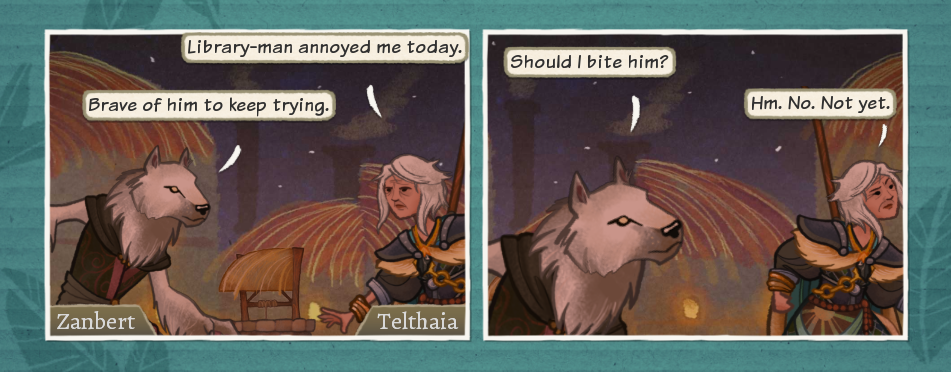
Zanbert Gravetether, however, is an example of how transformation–he’s become a wolfman, as you can see–sometimes can enhance the personality of a character and make them more memorable within one’s Wildermyth canon. Above, he’s offering to bite someone on behalf of his mystic friend, Telthaia Truffleworth.

And in this one, he’s delivering a devastating zinger group of bandits that he and the other party members have encountered. Note that this is from a different campaign, and he’s younger, which is why his coat is gray rather than white. But wow, “Maybe that should inform your decisions?” That’s cold, Zanbert.

Annnnd the less said about this one, the better! We’ll move on to a different set of characters now:

Deepists Or Cheesemongers?

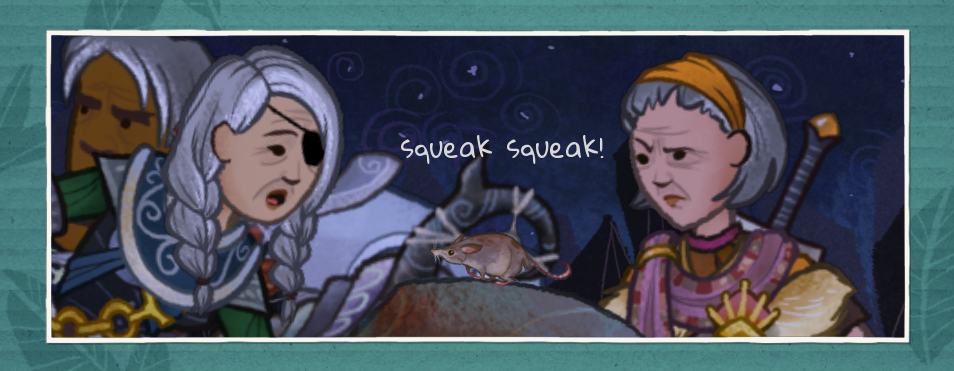
In the first one, above, two of our heroes, Ebbriana Sherbert (right) and Gretchen Greatwasp, are hearing testimony from a helpful mouse regarding the location of enemy forces. Grady Day (who somewhat escaped having as silly a name as the others in this campaign) is in the background.

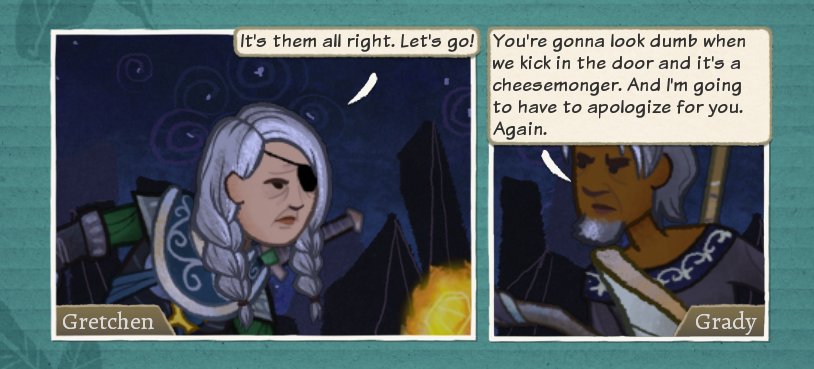
And here we see that Grady is somewhat skeptical of Gretchen taking the mouse’s word. Suggesting that rather than the Deepist cult that they’re fighting, the mouse might have just gotten excited about a cheesemonger being located nearby.

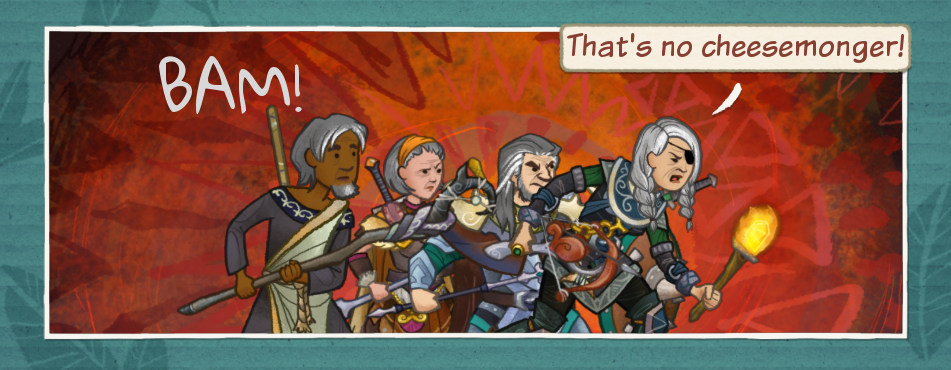
…but then the party–including the previously unseen Cobb Vas Sky (second from right)–charges in, to discover that, well, it’s NOT a cheesemonger. It was the Deepists after all. Rodents are right more often than you’d think.

“Library Lochsley”

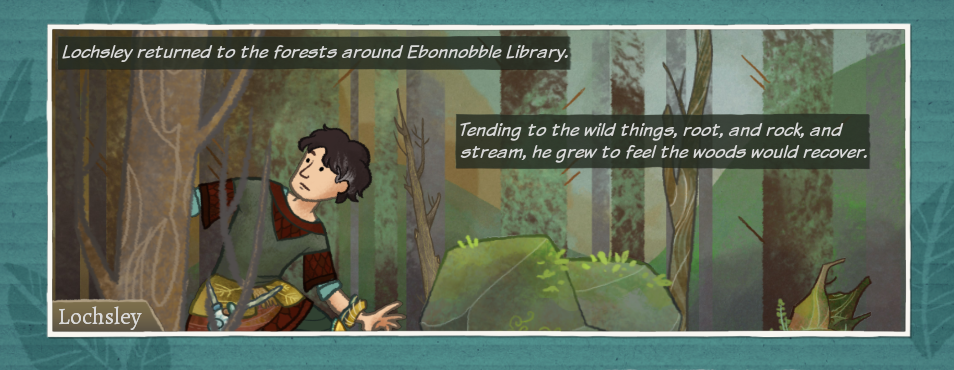
Each character in Wildermyth possesses personality traits, measured on a scale from 1-99. The two strongest traits go a long way towards determining their reactions to certain situations and their dialogue in certain interactions. To use an example from last Wildermyth Wednesday, Domino Wildelance–the mystic who threw himself down into an underground cavern to protect his daughter–is referred to as a “Goofish Leader” because his strongest personality trait is “leader,” and his second strongest is “goofball.”

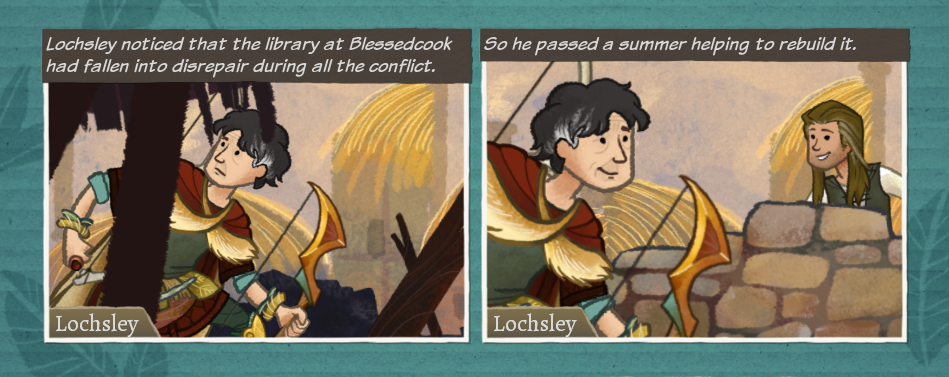
Lochsley Kynestrange? Well, he’s a Bookish Poet.

A real man of mystery. It’s hard to tell what he’s passionate about.

We’ll return next week!

Features

It’s Wildermyth Wednesday!

Wildermyth, a 2021 Worldwalker Games release, is a game I’ve played a lot over the last couple years. It’s a party-based fantasy RPG with turn-based combat, seamlessly woven into a story structure that shines the spotlight on the characters the player has created and recruited. While other squad management games (the rebooted XCOM and the first Darkest Dungeon, to name a couple) allow you to customize your charges but don’t do much to establish them as three-dimensional characters, Wildermyth takes the ball and runs in a character-focused direction. The game possesses a pretty impressive array of campaign options, but the characters you create and how they interact with each other are the meat of the story. And if you play enough if it, you may very well end up with your own cast of thousands.

So! Wildermyth Wednesday is a weekly feature that I hope to keep publishing as part of updating this blog more often again. As kindly suggested by one of the other contributors, this feature will include a handful of screenshots from the many I’ve collected, and a short explanation for why I picked each. Along the way, maybe this’ll spark your interest, dear reader, in playing the game. Or maybe you’ll just like observing the large cast of characters who’ve accumulated over umpteen playthroughs. Either way, without further adieu, below is the first of this week’s shots:

Skinny’s Battlecry

Wildermyth multiplayer is a joyful, if sometimes the slightest bit buggy, experience. The above is from the latest campaign that one of my siblings and I played which centered around fighting back a tide of the robots-with-bones creatures known as the Morthagi. We created these three as our starting characters: Aisling Starchaser is the blue-haired mystic on the right, Prim Weedwater is the hunter in the middle (my sister’s creation), and Skinny Conlock is the warrior who is struggling with the assignment of yelling something impressive as a battle cry.

The Freaky Freecairn Freedom Fighters, Years Later

And this one is from later in that same campaign. In fact, several years later. Aisling, Prim, and Skinny have all been at the fight for years, and have been joined by Prim’s son, Cabbage, and another warrior (left of Aisling) named Pip Rust. The five of them are accompanied by two allies whose names I won’t mention due to spoilers.

And yes, the name of the group for this campaign was, in fact, the Freaky Freecairn Freedom Fighters. And yes, we did pick the name.

Two Unfortunate Rivalries

The two screenshots below show two different rivalries forming during a custom campaign. The campaign set-up is designed to take a couple of your existing Legacy Heroes and generate each of them a younger sibling. I did this for Stornbaron and Kika because they were both older characters in my legacy who still didn’t have any family members. I thought it would be nice.

…and then they both formed rivalries with each other’s younger siblings. I was a little miffed over this happening. It wound up being a fun playthrough, nonetheless.

Domino Dives In, Daddily

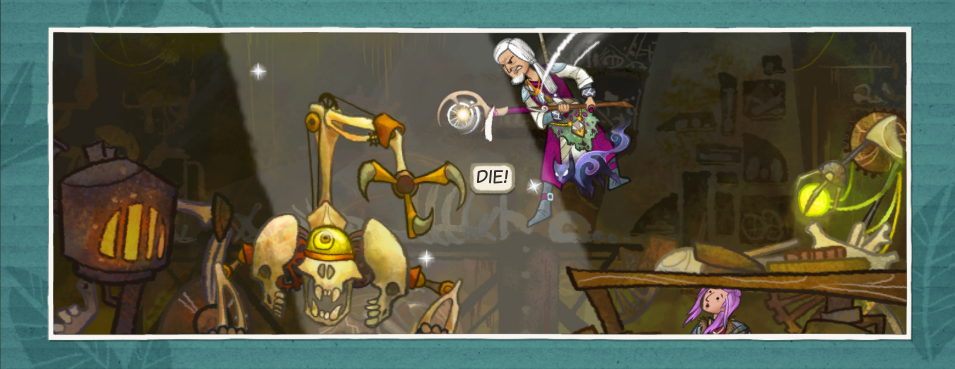
This last one is also one where our characters are fighting the Morthagi. In this event, Lirielle Wildelance fell through the ground into the Morthagi workshop, and is now hiding under the table while she waits for back-up. One of the options I had at this point was to allow her father, Domino Wildelance, to jump in after her. I decided to have him do that, since it’s in character with him being protective of the other members of the group. That’d be why there’s an old mystic and his shadow cat flying downwards towards a bone-and-metal monster. Domino’s not about to let his daughter fight the bad guys off alone.

Pink is one of their family colors according to my head canon.

Next!

We’ll return next Wednesday with a new set. In the meantime, maybe I’ll actually finish one of these reviews that’s been on the backburner for awhile now.

Reviews

Let’s Talk About Games People Shouldn’t Play (AssCreed Liberation)

Oh, hi.  It’s been a while.  Almost 3 months, I think.  *checks watch*  Yeah, about 3 months.  A whole 3 months I’ve spent trying to play Assassin’s Creed Liberation.  And in those 3 months, I’ve learned one very, very important life lesson.  This singular piece of enlightenment led me to happiness.  Want to know what it is?  Sure.  Here it is.  Don’t play Assassin’s Creed Liberation.  Hey, cool, review’s done, I’m gonna go back to playing a good game, The Last Tink-

the_scary_door_tn

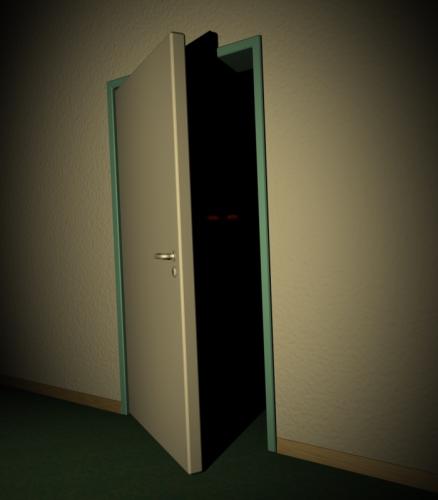
*Creeeeeeeeeeeeeeeeeeeeak*

Oh.  Did.  Did anyone else hear the door open?  Has it always been like that?  I can’t remember.  Wait, it’s cold out and the cat could run away, why the fuck’s the door open?  Hold on folks, I’m gonna go shut-

CINNAMON

OH GOD CINNAMON NO

Ahem.  It has come to my attention I cannot write a review that is nothing more than a strong advisory against people playing a video game.  It has been advised that I write an actual review, or risk severe consequences.  Thus, without further ado, here goes the review of a game I actually could not complete.

You read that right, I actually could not complete this game.  I tried for several months but due to a combination of poor controls, frustrating mechanics, and a game ending glitch, my attempt to complete (much less enjoy) Liberation was doomed from the start.  Let’s start with the controls.  They’ve been ported over from Assassin’s Creed 3, so already we’re not doing so hot.  There’s the same janky free-running issues that make it nearly impossible to travel from one rooftop to another, there’s the same difficulty with trying to maneuver yourself appropriately for a kill, there’s the same frequent issues with unintentionally jumping off of a roof and disturbing the guards’ tea break… you know, the classics of any free-running-based game!  If we’re talking about classic mistakes, that is.

Whoops! An Accident!

Whoops!  An accident!

This feeds directly into the issues with the game’s mechanics; namely that the developers ignored the issues in Assassin’s Creed 3, and instead decided to made more issues with Liberation’s mechanics.  For one, the main character, Aveline de Granpré, has three personas: the socialite, the slave, and the assassin.  This is a neat concept, but there are issues with all three classes and the mechanic itself.  If you’re playing the socialite you can charm other people into letting walk behind closed doors, and you can even charm guards into following you and protecting you.  Pretty nifty, right?  Not so much; there’s very little you can do to defend yourself.  You’re extremely limited in what weapons you can carry, you cannot free-run, and your top speed measures in at about the same as a particularly lethargic tree sloth who’s just downed an entire case of sleeping pills.  So what about the slave persona?  You can free-run, but you also draw more attention in this persona, and you’re limited to the same weapons as the socialite.  The assassin persona is the best and the worst of the bunch; you have access to all the mobility and equipment you had in prior games, but you start off as notorious every time you assume this persona, and gather notoriety the quickest.  This makes the assassin persona a powerful weapon that requires judicious use.  Right off the bat, this is an issue.

The point of the AssCreed series is to adopt the persona of….. wait for it…… an assassin!  A stealthy warrior capable of blending in with the crowd!  And assuming this persona… draws attention.  Anyone else notice an issue here?  Hands up if you notice an issue.  That’s right.  The persona that should be the most low-profile of them all draws the most attention!  This makes no sense.

“But Aaron, what if the guards are on the active lookout for anyone dressed like an Assassin?”

Who said that?  Was it you, Babquez?  I’m watching you; don’t interrupt me when I’m ranting.

Back to where we left off: guards looking for you in the assassin persona.  There’s been established precedent that guards looking for assassins does bunk all to your ability to blend into the general crowd.  See: every other AssCreed game that came out prior to this game.  So why would it change in this game?  The answer is bad; it’s for the sake of the new persona swap mechanic.  I hate this mechanic.  I hate it for several reasons.  I hate that it changed everything about how you played AssCreed games (well, game.  Clearly the developers didn’t end up liking it either, since it’s yet to make a reappearance), I hate that it leads to making light of the plight of slaves in America during the 18th century, I hate that it perpetuates the idea that women’s main powers during that time were flirting with people and dressing up, and I hate that it perpetuates sexism when there was a chance to actually create a strong female character.  Let’s take a closer look, shall we?

Nope

Nope. Not like this.

First, the slave persona.  Where to start.  Well, let’s start with Aveline, who is of the mocha skinned persuasion.  She uses the slave persona to blend in with the general populace when she’s in the actual town of New Orleans, and to blend in with the escaped slave population when she’s roughin’ it in the bayou.  There’s two issues with this.  One, it downplays the hardships slaves faced in America in the 18th century by portraying someone disguised as one being free to run around the deep South without being harassed.  Two requires a bit more background info.  When you make it to the swamp and begin encountering the freed slaves/free Africans, if they’re black, they’re all dressed in tribalistic gear and face paint.  Every one.  White people in the bayou tend to be dressed in sensible clothing, and this idea for sensible dress extends to Aveline’s personas.  So the second (and third, there are three now) issue(s) with the slave persona include whitewashing Aveline by, despite her skin tone, dressing her like white “civilized” people, and dressing up the black “savage” people in tribal garb.  Maybe Ubisoft has a good reason for putting the above issues in their game, but I don’t know what they are, because I couldn’t actually play their f*%&ing game.  More on that in a bit!

For now, let’s talk about the socialite persona.  Wow.  Where to begin.  First, all of the clothing options available for the socialite accentuate Aveline’s cleavage and hide her other physical features.  All the better to charm men with.  Because a woman who’s able to use her cleavage to ensnare the attentions of men and do little else is an empowered character, right?  Right?  *crickets*  No, really, that’s the extent of what the socialite can do.  That’s why this persona is in the game.  To “charm” people.  If there’s more to the persona, I wouldn’t know, because I couldn’t play the f*%&ing game.  Almost there!

The final issue with the personas system is you can’t switch between the personas unless you have a dressing room.  Code-wise, I can understand the need for this kind of kit switching location.  It means the game can process the change of persona, and change the rules it applies to the game world based on Aveline’s appearance.  This rationale makes sense from this perspective.  In practice it takes a character who’s supposed to be mobile, mutable, and adaptable, and ties them down to a specific type of location if the player wants to utilize one of the main abilities in the game.  This is not good game design.  Individually any of these things are bad, but not game-ruining.  Combined with Aveline being the first female protagonist in the AssCreed universe, it pushes the game into the “this is both bad and problematic” realm.  Kinda like a tractor that, instead of pulling heavy equipment, sprays nacho cheese all over the place.

Cheese Fields

Soon, the pepperjack fields shall be sown

Finally, we come to the biggest issue with the game, namely that it has a serious game-ending glitch.  This is a well-known glitch, and Ubisoft has acknowledged its existence and continual presence in their game.  Sometimes, Aveline will stutter when she’s swimming.  Then you get to land.  And you keep swimming.  People can interact with you, but you can’t interact with them.  Normally, you can fix this glitch by exiting the game and re-opening it.  But sometimes?  Sometimes the game just says no.  Sometimes the game decides it doesn’t want to be played.  Sometimes, you just wind up swimming through the streets of New Orleans, unable to interact with anyone or anything, unable to remove yourself from your land-filled half-life.  I spent literal months trying to figure out how to fix this glitch, and I couldn’t.  And when I couldn’t, I realized that I could not continue.  It was only act 3 of the game, but I couldn’t find a way to replay my way up to that point.  The game mechanics.  The inability to actually play the game.  The importing of a terrible free-running system and making it worse.  I couldn’t do it.  The game beat me.


0/5 Would not play again. Burn it with fire, and don't look back.
First Impressions, Games

Exploring Assassin’s Creed 3 is Worse Than Syphilitic Corn

I’ve been playing a lot of Assassin’s Creed 3 lately, and the phrase that best sums up this experience is “Why did I even bother”. The game starts off alright enough. You start off playing Haytham, who’s a man of mystery and parkour, and the controls feel tight, and the plot seems interesting right from the start. The first 2-3 hours are downright enjoyable: you get minimal Desmond, you’re in a cool ruin when you ARE Desmond, and you’re in a somewhat content-rich era of history, involving two present-day superpowers (British and France) and one future superpower (‘MURICA). The game feels like it has potential. It feels like maybe, maybe this game is a worthy successor to Assassin’s Creed: Revelations. That feeling is a lie. A filthy, filthy toilet of a lie.

Like this, but after you’ve been to Taco Bell and eaten 12  under-cooked Gorditas.  You know, a typical Tuesday.

First, let’s talk about the environment.  Having a wilderness (easily the most expansive area of the game) to run around in is a wonderful idea.  The idea of moving from tree to tree is brilliant, and makes nature free-running actually possible.  No longer is horse-riding essential for getting around!  Ah, if only these words were true.  Alas, they are not.  You see, Ubisoft inserted snow into this game.  What’s wrong with snow you might ask?  Normally, there’s nothing wrong with it.  I like snow in real life.  It’s fun to ski over, or have fun snow shenanigans with friends and family in. Like that time I got turned into a snowman.

In this game though, it’s horrible.  When you don’t have a horse, you move at a rate approximating a turtle trying to outrun a particularly threatening banana.  When you do have a horse, the environment actually works against you.  There will be hills hidden under the snow you cannot see, and this means you will either run into an invisible wall your horse cannot climb, or your valiant steed will bravely fling itself off of a 5 foot high cliff and… die, for some reason.  I wasn’t aware horses were made of stained glass back in colonial times, but there you are.  So you’re forced to stick to the roads if you want to get anywhere quick.  Which kind of negates the point of giving the player a wilderness to explore, don’tcha think?

“But Aaron” I hear you say, lip aquiver, “it’s not winter ALL the time!  Surely, it can’t be winter for more than a part of the game?”  And you’re right, it’s not winter all the time.  Just during the interesting sections of the game that take place in the wilderness.  Now, I hear some folks waving their hands and blowing raspberries.  While this is a fun group activity, bear with me for a minute.

Wha- No, no, not literally!  Back in the closet, Cinnamon!

“Why not just do your exploring in the summer, and then stay on the roads for the winter story missions?” I hear you ask, lips flapping in your self-generated breeze.  Excellent question!  Because then, what’s the point of having an expansive wilderness to explore in the first place?  You either spend all your time wandering through it completing side quests while avoiding the main plot, or you’re prohibited from doing any meaningful exploration/using alternative travel routes to the main quest by the game’s actual environment.  The previously mentioned tree travel is hard to access during wintertime, due to the also-previously-mentioned snow cover that tends to cover up landmark areas where you’d access this network, and running through snow on foot feels like you’re running a mental marathon of boredom.  It’s like the game is testing whether your fingers or your attention span runs out first.  The inclusion of unlockable fast travel points (a la fort liberation) to move from point to point quickly is nice, but then we return to the original question: What’s the point of having an expansive wilderness to explore in the first place?  Especially if you’re either going to zip on by it when possible, or it actively discourages you from exploring.

The answer is simple, and actually hearkens back to Assassin’s Creed 1 (though done much worse).  It’s artificial gameplay extension, plain and simple.  Except instead of giving you a mechanism that’ll always work to help you move around the map more quickly (a horse), the map is designed to slow you down for the reasons stated.  Hidden hills, an environment that can only be explored when the main plot has nothing to do with it, treetop travel that’s either circuitous or hidden, it all adds up to gameplay that’s pointless, drawn out, and boring.  It’s a problem in the cities too, though it’s not as clear as in the wilderness.  The streets of towns have been moved closer together, making rooftop travel more viable than in older games, and horses have had their speed drastically reduced as well, encouraging you to free-run your way through Colonial Boston and New York.  No, seriously, you run faster on foot than you do on a horse, and there are many more alleyways horses cannot venture down than in prior games.  And yet, frequently, you’ll find areas of town where the game seems to intentionally screw with you.  Randomly, streets will widen for a couple hundred feet in either direction and you’ll be stranded like Tom Hanks in Castaway. Or you’ll hop from a roof to a town tree that can be interacted with in the wild, but unbeknownst to you, some merry prankster lubed the tree up with Vaseline and before you know it, you’ve fallen out of the tree and into a squad of British soldiers.

Handle the idiot George, I’ve tea to fetch.

This brings us to the second major issue: There are only 3 areas, and they’re all boring.  You have two colonial towns, and a massive wilderness.  Sure there’s history surrounding each location, but once you’ve pushed past that, who cares?  Boston and New York are functionally the same, and the wilderness has the previously discussed issues.  So when you get down to it, what’s there really to explore?  The sailing portions of the game are also basically nonexistent, and they’re some of the most fun I’ve ever had playing a video game.  Why cut them so short? Why fully explore New York when it’s just the same re-arrangement of buildings as Boston? Why go fully explore the wilderness when it has no bearing on the plot?  Why not break the wilderness up into several areas, all accessible through fast travel instead of one sprawling area you have to traverse for hours upon hours upon hours to fully explore (if you care to?) Just skip the whole thing. You’d be better served going to the real cities/wilderness and wandering around for an equal amount of time.  It’s a more enjoyable experience.

Except for Cinnamon.

Which brings us to the third major issue: Pacing.  The game’s fine through most of its plot, but the climax (arguably the most important part of a game) is paced horribly.  Caution, spoilers ahead!  First off, Desmond’s Dad gets captured, so you have to go and save him.  Yay, hooray.  Except this is modern day, so why doesn’t Desmond get shot by one of the several dozen security people you fight? Why does the counter-agent who’s been hounding you on each other modern day mission suddenly have a violent and unexplained crazy episode right when he’s about to take Desmond out?  Why does this whole segment last only 10-15 minutes, including loading times?  These are all excellent questions that, rather than answer, the final two Animus sequences instead chose to imitate.  The penultimate Animus Sequence has two missions, most of which involve walking and not pounding your forehead against one of the many brick walls in the game.  The final sequence is a disjointed, blurry series of events that are nigh-on impossible to relate to due to the lack of anything resembling plot structure.  For some reason, Charles Lee and not Haytham (Connor’s Dad) is the final villain.  For some reason, the only times you actually get to fight Lee are during cutscenes.  It feels like Ubisoft reversed the final two sequences for some reason and then cut out 50% of the content.

When you get right down to it, playing Assassin’s Creed 3 feels like watching an episode of Seinfeld.  It’s a game about nothing, that ends with really poor pacing.  Also, maybe something funny happened.


2/5, would not play again.  For more like this, stay tuned.

First Impressions, Games

My First Few Hours With “12 is Better Than 6”

I was interested in what’s been called “Wild West Hotline Miami” in some circles pretty much as soon as I saw the concept art. Thus, after it was able to scrape through its kickstarter, I picked it up on the release sale. While HM has some issues (and I haven’t gotten around to playing the second one through yet, as of writing this), I can remember myself and a friend I was still with for a weekend giggling at the frenetic pace and unforgiving gameplay. We need more entries into the “you can be one-shot just like your enemies” sub-genre, because it produces some hilarious moments while also presenting different challenges than your typical shooters. Or even your typical top-down game.

So that’s the appeal for me coming in. I didn’t want a copy of Hotline Miami, but I was happy to see someone else trying to expand on HM’s formula. And, indeed, there are many similarities. While “12 is Better Than 6” has it’s own distinctive differences, I submit that if you enjoyed the gameplay of HM–and what I’ve seen of its sequel–you’ll like this title as well. Games like these are the rare single-player experiences where you’ll die so often–and so quickly–that it’s nearly impossible to get frustrated at having to reboot a level. It’s a funny balance that feels like it’s come so far back around from the typical ideas about how to avoid frustrating the player–while still providing a challenge–that it ends up working quite well.

Having said all that about how 12iBT6 relates to other games…if you haven’t played Hotline Miami, you’ll probably want to know that this game is a top-down shooter with a fast pace where part of the fun is that you can only sustain about as much damage as your opponents. Since that appears to be almost universally somewhere between 1 and 2 bullet or knife wounds, you can probably imagine why the game’s pace is so fast. Enemies will quickly react to a series of gunshots, so once you go loud, you’re in for a ridiculously intense gun battle.
2015-11-24_00001

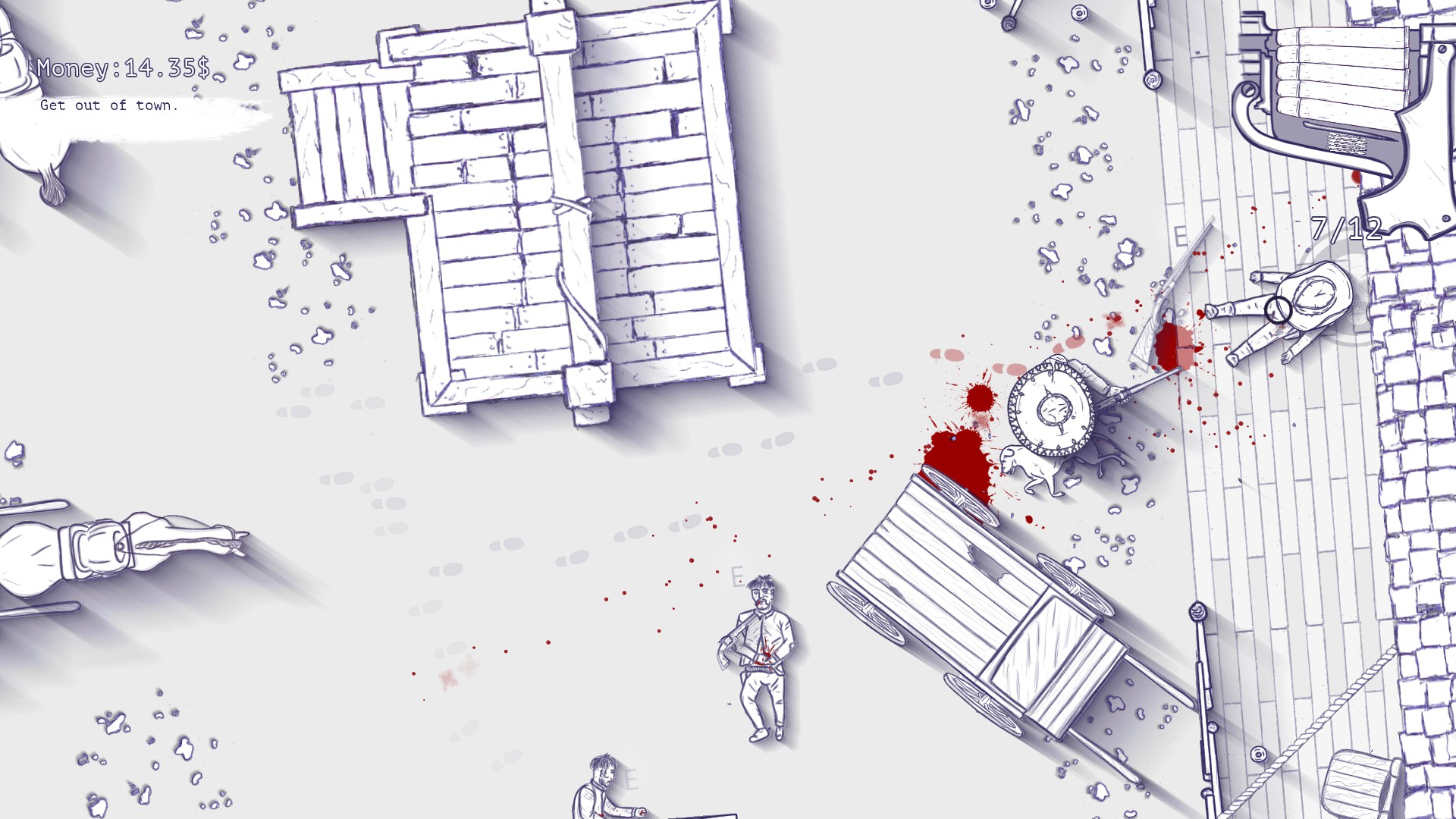
The game looks pretty darn cool, even if the only color in supply appears to be red…

Unlike Hotline Miami (and quite a lot of other games) though, there’s no real storyline beyond “your are from Mexico and desire revenge for something rather vague.” Whereas the other entries in this subgenre I mentioned gave me enough hints about a story that my killing of baddies (er, or worse-than-my-characteries) seemed to be getting me closer to an ending that had a payoff. While 12 is Better Than 6 doesn’t need to be matched up against HM directly for it to be considered good, it’s fair to note that this element is pretty non-existent here. The story is very much a rather transparent means-to-an-end thus far, and doesn’t really show any signs of changing. If it does pick up at some point, I’ll amend this statement in my follow-up post(the actual review).

Funnily enough, Westerns (the movie genre, mind you) have, in many cases, chosen to run with stripped-down storylines. This works incredibly well if you have some combination of interesting characters and a compelling plot, as if there’s no real story beyond “dude wants revenge” that actually can enhance the larger-than-life framing of the famous gunfighters that you’re focusing on. This is to say, it’s not necessarily a bad thing to eschew a complex plot, especially in the movie genre that this game borrows from, but the nature of 12iBT6 doesn’t provide us with any real characters either. It’s almost all about the shooting of the guys who are shooting at you. At the point I’m at, I’ve talked to a grand total of two characters that I haven’t killed, and one that I haven’t shot. And yes, they’re all dudes and this is supposed to be in the Wild West and look, the storyline is not a strong part of the game thus far and it’s not even actually something that adds to the game even slightly so far. The only other thing I can think of is that the player character calls a lot of people that he’s shooting at “Gringo.”

Anyway, so the gameplay. Earlier I mentioned that if you’ve already played certain games that take place somewhere in Florida, you’d like this game. I believe that to be true, but there’s a couple important distinctions to make between the combat styles of the two. Hotline Miami and 12 is Better Than 6 both eschew the traditional semi-RPGdom of overhead shooters going back to, say, Shadowgrounds, in favor of a style that has the player just as vulnerable as what they’re shooting at. That’s cool, as it’s the larger part of what gives them a distinct style.

The combat, however, manages to be significantly different despite the similar basic concept for gameplay. Hotline Miami, to me, felt like a glorious union of top-down shooter, quick-twitch shooter, and a puzzle game. That last one is the one I want to highlight, because the combination of the first two elements left me with a game that I realized part of the reason I enjoyed so much was because I was given, for example, seven obstacles to get by, a bunch of possible ways to do it, and many chances to fail in either my planning or my execution. HM is so fast-paced that you’re both relying on your planning and the quick-twitch part of your brain to get through it. There are times you can get lucky or unlucky, sure, but mainly it’s a game where if you come up with a workable path from the start of the level to the finish, and manage to not miss a bunch of shots, you’ll beat the level. That’s harder than it sounds or it wouldn’t be a fun game, of course.

12 is Better Than 6 has a higher element of luck, if the same levels of trial-and-error when it comes to exploring levels (and dying, naturally). Part of the reason for this is the “cocking” mechanism, where you can’t just unload any weapon you find into the bad guys until they’re all dead. You don’t just have to reload when you’re out of bullets, you need to re-cock the gun after every shot you fire. Also, knifing people from the front doesn’t really work, so unless you’re somehow lucky enough to get a bunch of enemies with their backs to you–it hasn’t happened to me yet–all in a row, you’re not going to be mowing your way through levels simply because, even though the enemies can take a grand total of maybe two hits, you’re not going to be very good at eliminating groups quickly unless they line up.

I’m not exaggerating for effect there, actually. One of the few ways you can wipe out a group of three really quickly is by firing one bullet that goes through them all (you can also through a stick of dynamite at them but you can’t carry many of those). Otherwise, you do tend to end up playing peek-a-boo with a bunch of enemies, and it’s up to both your aim, your quickness in re-cocking, your decisions related to cover, and whether or not the Bullet Gods have blessed you with not getting hit. That last factor really does often come down to luck, since you can be pretty damn good at peek-a-boo and still get winged by one of the four enemies you’re playing it with. This “shooting at a mob of enemies while frantically ducking out from behind a bar’s table” thing tends to crop up very often if you’re not extremely stealthy (and some levels it’s totally unavoidable), and this definitely a key difference between HM and this game.

While it’s possible to cheese your way through levels sometimes, most of the gameplay is finding a way to eliminate targets that are away from the rest of the group, and then getting into frantic gunfights with the rest where part of the “quick-twitch” is actually re-cocking your weapon fast enough. Yeah, that’s strange, right? I feel like I need to give props to the devs for even making that a game mechanic that matters in the moment, rather than it just being a thing you do in-between encounters. Regardless of whether it’s prop-worthy, it means that the frenetic situations are the ones calling for using cover effectively, and ducking out to shoot the baddies when they’re reloading or exposed. This is in contrast to HM, where you basically do everything on the fly and the path you take is just as important as actually hitting the targets in front of you, as often they work out to be one and the same.

It also means that in its own way, 12 is Better Than 6 is less forgiving of the moments where you miss. Because you’ll need to re-cock, possibly duck back in and out of cover, and fire again. In that other game that I’m not playing right now, there are different, just as unforgiving mechanics. In this one, it’s that you really only get a couple of shots at an enemy before they get to you and kill you. The path you take doesn’t matter as much as the more-emergent HM games, but your accuracy matters more. So you’re more prone to dying because of simple physical errors, or the luck of whether or not a shot registers as a hit when you’re firing at the edge of a hitbox.

In terms of the audio/visual experience, the game lives up to previous iterations in the subgenre, as the hand-drawn graphics–shown above–are impressive if a tad minimalist from my taste. Whatever you prefer, though, the artistic skill was clearly there. The music is a series of twangy guitar that adds to the frantic pace of your duck-and-cover shootouts, and feels appropriate for the “wild west” setting. Both of these things can’t really be overstated, as the music in-particular adds to the experience for me.

“12 is Better Than 6” isn’t as good as Hotline Miami, in my opinion (which is based on completing about half the game so far), but it also isn’t a ripoff of that title so much as a distinctly different entry in the “oh wow I died really quickly and it was great” subgenre of top-down shooters. There are issues with some of the gameplay’s rough edges, and I wish the storyline was a thing (and that, well, the characters were a thing), but for $8.49, I feel like it’s hard to go wrong if you’re into top-down ridiculousness. Developed by Inkstain Games and published by Pinkapp Games, it’s still at the sale price (down from $10) through Friday at noon on Steam.